
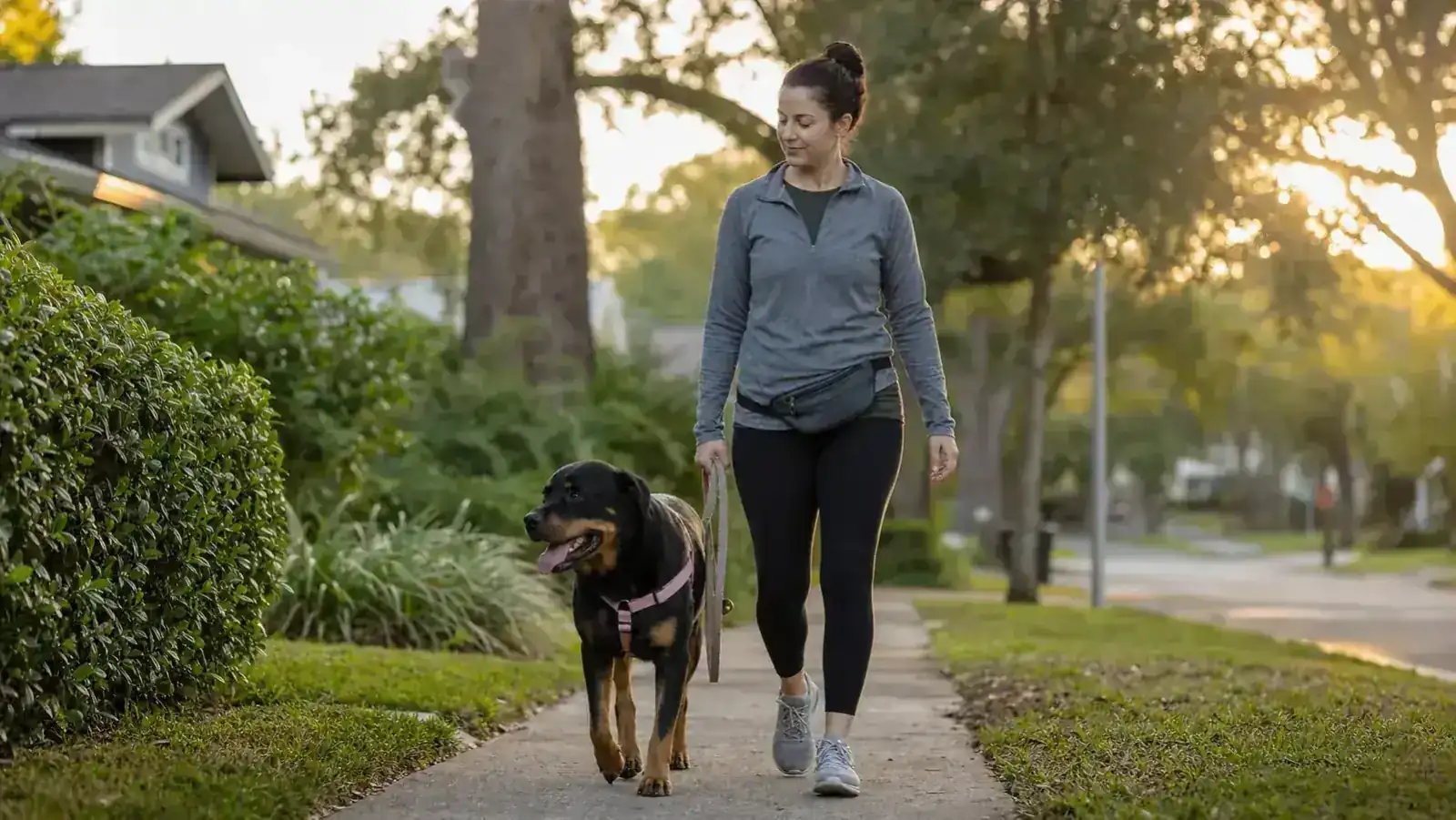
My dog Cooper is a 62-pound Labrador mix who spent the first two years of his life convinced that the leash was a starter pistol. Every walk left me with a sore shoulder and a knot of dread before I even got to the door. I tried a flat collar, a back-clip harness, a choke chain I'm not proud of. Nothing stuck. Then I tried a front-clip no-pull harness, specifically the PetSafe Easy Walk, and the first walk was noticeably different. Not perfect. But noticeably different. Here are the ten reasons I wish I had switched sooner.
If you've been writing off harnesses because you tried a back-clip version and your dog still pulled like a sled dog, keep reading. The front-clip design changes the physics entirely.
Still getting dragged on every walk? This is the harness Cooper's been wearing for 14 months.
The PetSafe Easy Walk has a 4.3-star rating across nearly 49,000 Amazon reviews. It fits small, medium, and large breeds, and it comes with four adjustable points so you can dial in a secure, escape-proof fit. Check current sizing and pricing on Amazon.
Amazon Check Today's Price on Amazon →The Front-Clip Design Physically Can't Reward Pulling
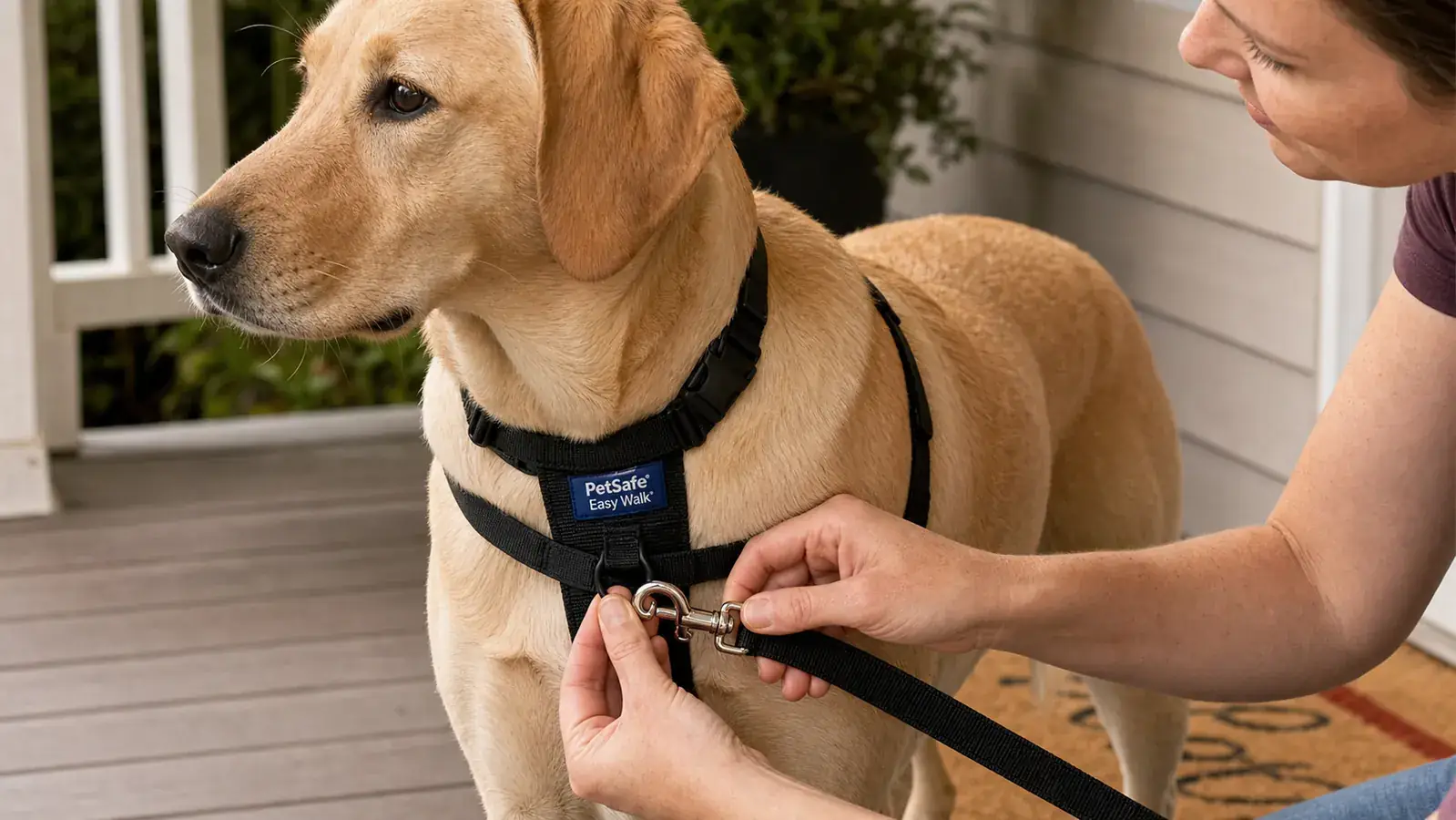
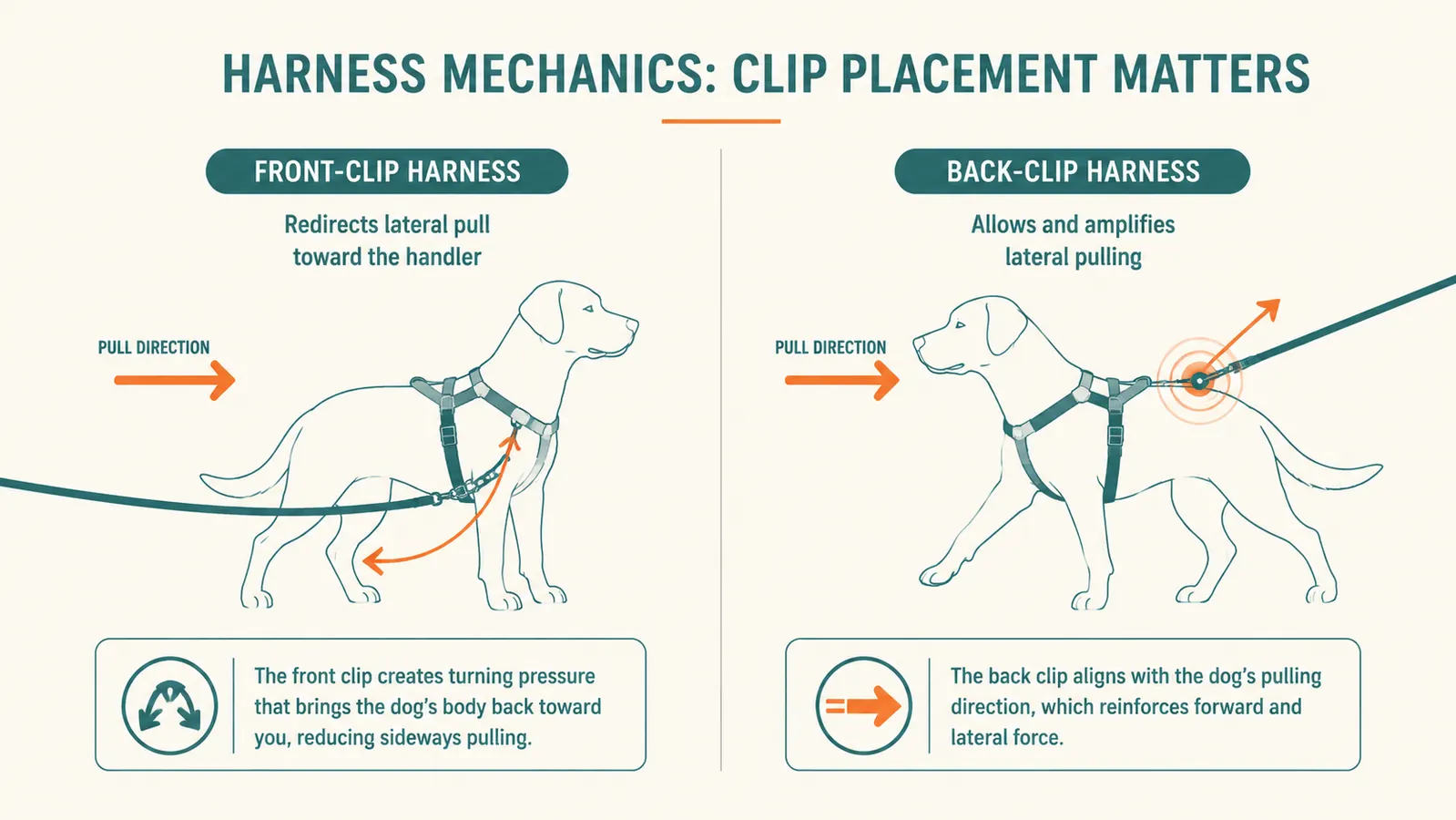
A back-clip harness sits between your dog's shoulder blades. When she pulls forward, her full body weight goes into the harness and the leash goes taut in the direction she wants to go. She's essentially wearing a sled harness. A front-clip design, like the PetSafe Easy Walk, attaches the leash at the dog's chest. When she surges forward, the leash tension swings her body to the side instead of letting her power through. She physically can't build momentum in the pulling direction. That redirection, repeated over dozens of walks, teaches her that pulling doesn't get her anywhere.
You Don't Need a Trainer First
A prong collar or a head halter often requires a professional to introduce properly or your dog panics and claws at her face for 10 minutes. The Easy Walk goes on and you walk. There's no conditioning period and no equipment-specific anxiety. The harness does the mechanical work while your dog figures out the pattern. That said, if you do add basic loose-leash work alongside the harness, progress is faster. You can read exactly how to layer that training in our guide on <a href="/how-to-stop-dog-pulling-on-leash-with-harness">how to stop dog pulling on leash using a no-pull harness</a>.
No Trachea Pressure, No Coughing
A flat collar on a hard puller puts real stress on the trachea and neck vertebrae. If your dog chokes, gags, or coughs mid-walk, that's not normal and it's worth taking seriously. Harnesses distribute leash pressure across the chest and shoulders, not the throat. The Easy Walk in particular sits across the sternum and behind the front legs, keeping the straps away from the armpit area where cheaper harnesses can cause rubbing sores. For any dog, but especially brachycephalic breeds like Bulldogs or Pugs, moving the pressure point off the neck is not a luxury.
Four Adjustment Points Mean a Real Fit, Not an Approximate One
One of the reasons cheap harnesses fail is they come in four sizes and hope for the best. The PetSafe Easy Walk has four separate adjustment points: the chest strap, both shoulder straps, and the belly band. That level of fit matters because a harness that shifts around on a dog who pulls creates the same chafing problem you were trying to escape with the collar. If you're unsure whether the Easy Walk fits your specific dog's chest width and girth, our <a href="/petsafe-easy-walk-harness-honest-review">full honest review of the PetSafe Easy Walk</a> covers fit across several breeds in detail.
Walks Are Safer for Both of You
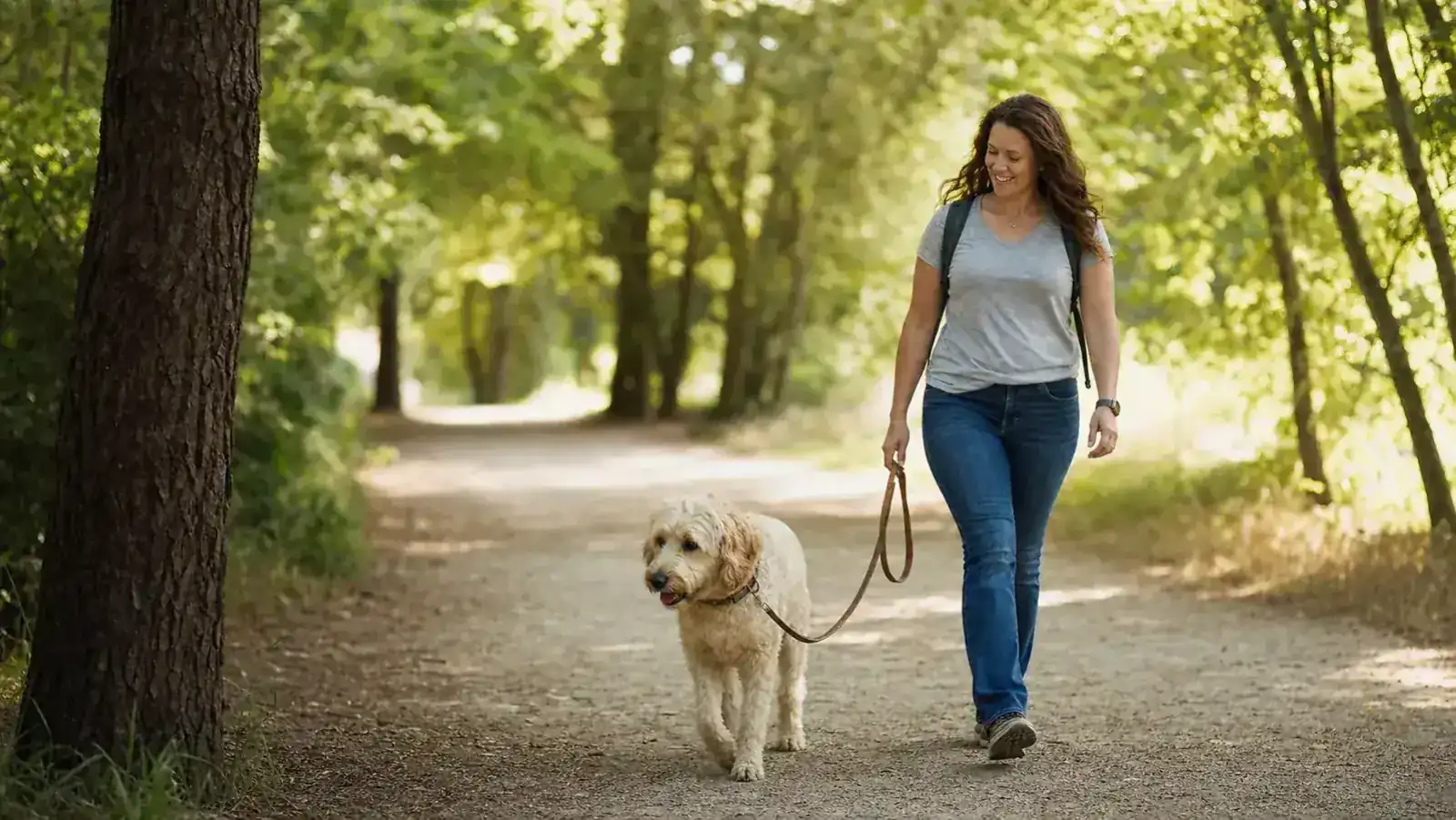
If you have a 70-plus-pound dog and you're being pulled toward traffic, a curb, or another reactive dog, you have a real safety problem, not just an inconvenience. A no-pull harness reduces the force your dog can apply in a straight line. You stay more upright, your grip is more controlled, and you can redirect the dog without a wrestling match. Older owners, owners with shoulder injuries, and kids who walk the family dog benefit from this most. I started letting my 11-year-old nephew walk Cooper after we switched to the Easy Walk. That wasn't happening before.
It's Faster to Put On Than a Head Halter
Head halters like the Gentle Leader work on a similar redirection principle, but they loop over the muzzle, which many dogs find stressful and many owners find fiddly to position correctly. The Easy Walk clips around the body in seconds once you've dialed in the fit. Buckle the belly band, clip the chest, attach the leash to the front ring, and you're out the door. Cooper went from head-halter avoidance (he'd rub his face on the floor for a full minute) to walking into the harness calmly because there's nothing going over his face.
Results Show Up in Days, Not Weeks
This isn't a six-week training program. Within three or four walks, most dogs start to show a noticeable reduction in forward lunging because the redirection pattern starts to register. Cooper was walking at a loose leash roughly 80% of the time within ten days. He still surges when he spots a squirrel, but the harness turns that lunge into a spin instead of a full-body drag. Combine it with a simple "let's go" cue and the improvement compounds quickly. For a direct comparison of how the Easy Walk stacks up against a competing no-pull design, see our <a href="/petsafe-easy-walk-vs-tobedri-no-pull-harness">PetSafe Easy Walk vs tobeDRI comparison</a>.
It Won't Cost You Much to Try It
Some anti-pull tools run at premium prices before you even factor in the professional instruction required to use them correctly. The PetSafe Easy Walk comes in at budget pricing at most price points. If it works for your dog, great. If your dog turns out to be the rare puller who genuinely doesn't respond to front-clip redirection, you're not out much. The low price of entry makes it a sensible first step before you book a trainer or invest in a higher-cost alternative.
Multiple Colors Mean Your Dog Doesn't Have to Look Like a Utility Worker
This is minor, but it's real. The Easy Walk comes in a range of colors, including green apple, raspberry, and sky blue, so you're not stuck with a black nylon strap that makes every photo look like a gear catalog. Megan-level observation: the stitching on the chest strap has held up through 14 months of daily walks and one round in the washing machine, which is more than I can say for two back-clip harnesses that delaminated within six months.
You Start Looking Forward to Walks Again
This one is hard to quantify but it's the one that sticks. When the walk is a fight, you shorten it, you skip it on bad days, and the dog suffers for it. Cooper needs about 45 minutes of walking each day to be calm in the house. Before the harness switch, we were doing 20 minutes of exhausting pulling, and I was frazzled by the time I got back. Now we do the full 45, sometimes longer. The harness didn't train Cooper to be a perfect walker. It just removed enough friction that walking is something I actually choose to do. That's worth more than any feature spec.
What I'd Skip
The Easy Walk is not the right tool for every dog. If your dog is an escape artist who can back out of harnesses, the fit needs to be dialed in tightly on all four adjustment points. Barrel-chested breeds like Bulldogs and Pitbulls can be harder to fit because the chest strap wants to ride up toward the throat. In those cases, measure carefully against the size chart before ordering. And if your dog's pulling stems from reactive behavior toward other dogs or people, a no-pull harness reduces the physical impact of lunging but it doesn't address the underlying anxiety. Pairing it with counter-conditioning work will get you further than the harness alone.
The harness didn't fix Cooper's pulling overnight. It changed the physics of the walk enough that I stopped dreading it, and that consistency is what actually made the difference.
Ready to stop getting dragged? The Easy Walk is the lowest-friction place to start.
Nearly 49,000 Amazon reviews, four adjustment points, and a front-clip design that redirects pulling force instead of absorbing it. Check current pricing and availability, and use the Amazon size guide to match your dog's chest girth before ordering.
Amazon Check Today's Price on Amazon →