
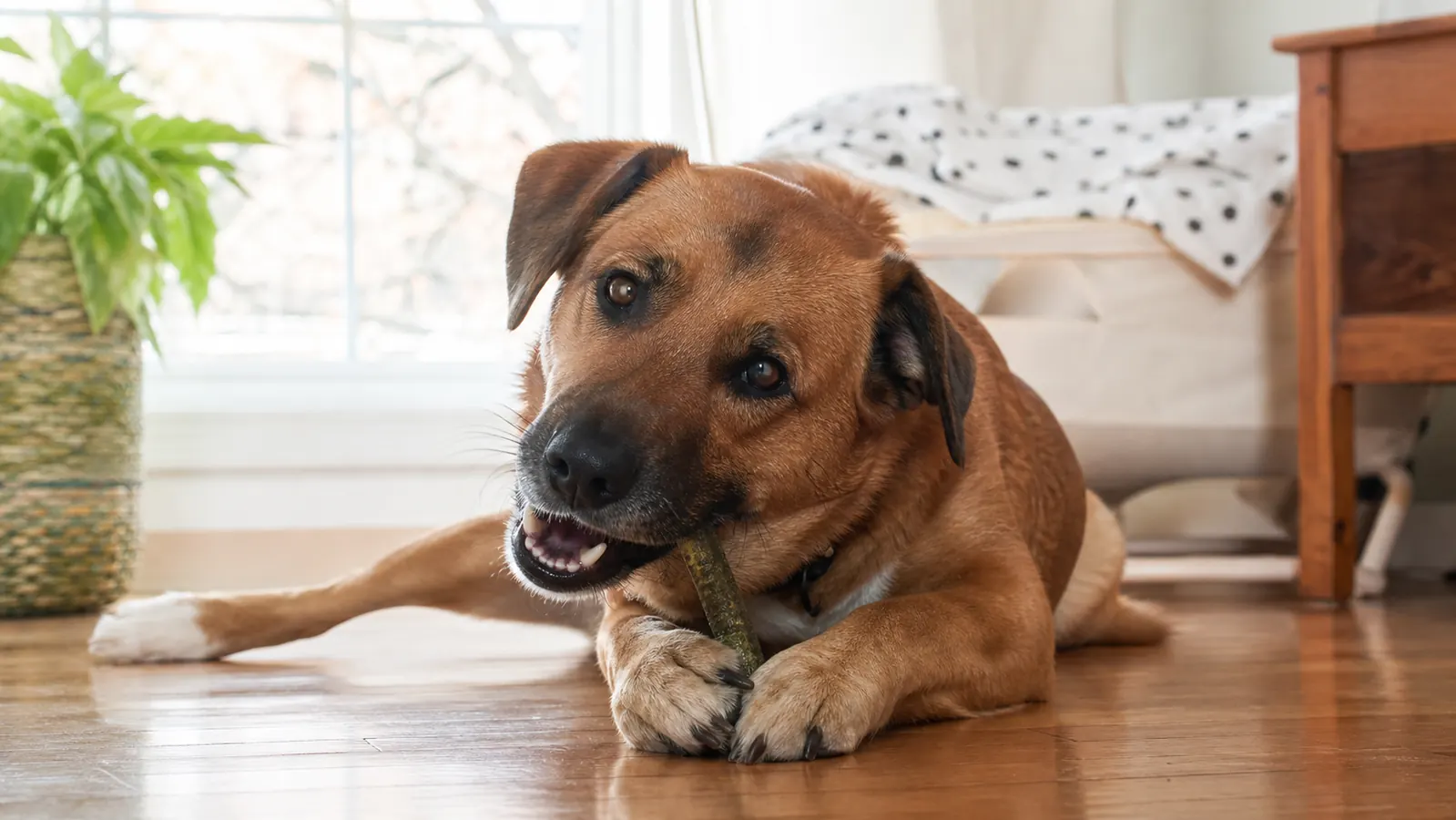
My dog Biscuit is a five-year-old beagle mix, 28 pounds, and at his last annual checkup the vet pulled me aside and showed me the yellowing along his back molars. Not bad enough to need a cleaning under anesthesia yet, she said, but we were heading that direction fast. That conversation cost me nothing but it lit a fire. I had not been doing anything consistent for his teeth beyond the occasional dental treat thrown in his bowl. I left that appointment and spent a week actually researching what works, what does not, and what I could realistically keep up with every day. This guide is the routine I landed on.
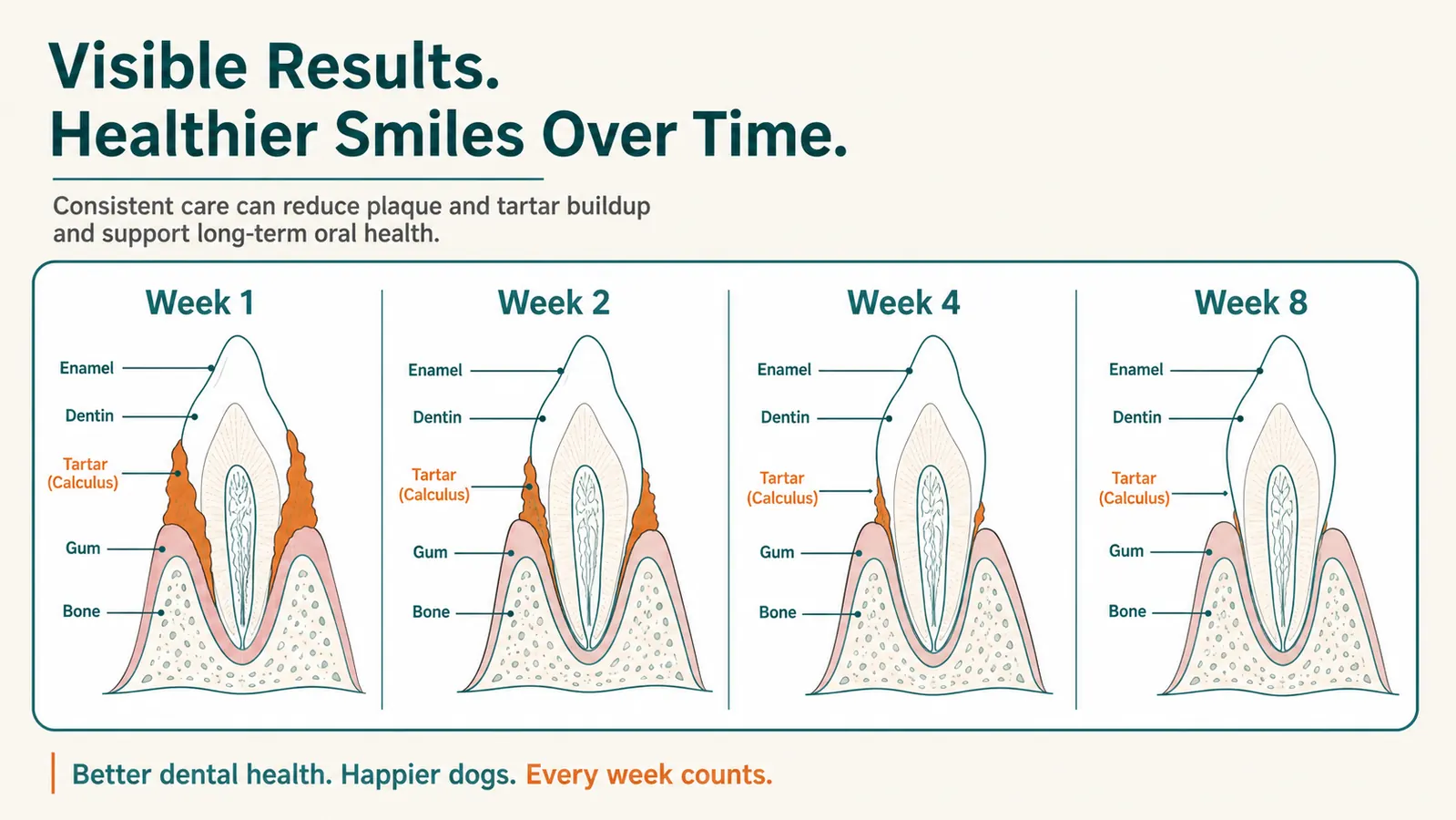
Dental disease in dogs is genuinely underrated as a health problem. By age three, studies regularly show that around 80 percent of dogs have some degree of periodontal disease. It starts as plaque, which is just bacteria, saliva, and food particles forming a soft film on the tooth surface. Left alone, plaque mineralizes into tartar within 24 to 48 hours, and tartar is what causes gum inflammation, infection, and eventually bone loss and tooth loss. The only thing standing between plaque and tartar is mechanical disruption, meaning something has to physically break up that film before it hardens. Dental chews do that job every day without requiring you to pin your dog down with a toothbrush.
Your dog's teeth are building tartar right now. This is the daily chew I use.
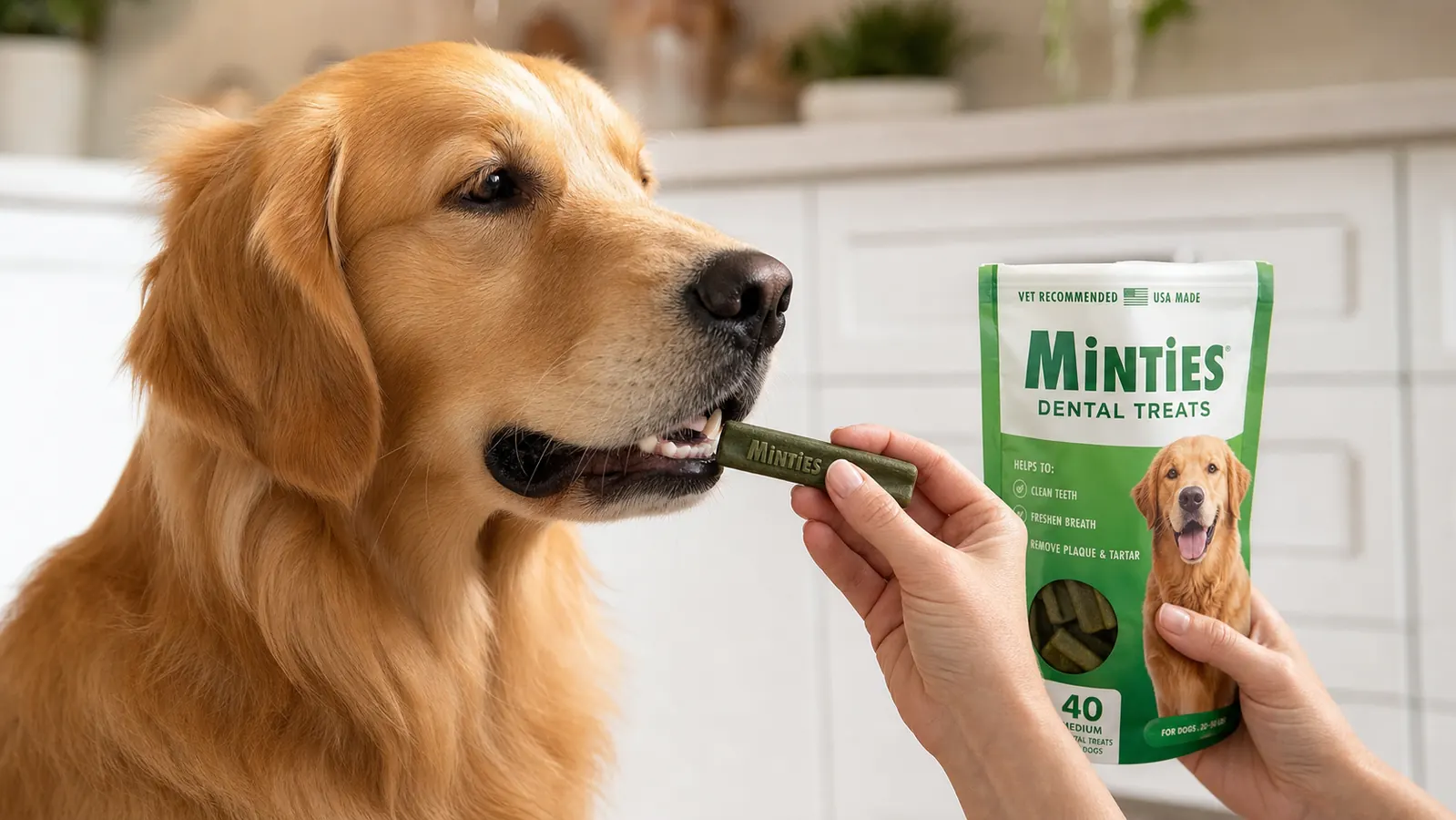
Minties Dental Chews are vet-recommended, mint-flavored, and sized for dogs 10 to 50 pounds. Over 36,000 Amazon reviews. The bag I keep in my kitchen takes about 30 seconds per day to use. Start with the right size for your dog.
Amazon Check Today's Price on Amazon →Step 1: Choose the Right Chew Size for Your Dog
Size matching matters more than most people realize. A chew that is too small for your dog gets swallowed in one bite without doing any scrubbing work. A chew that is too large for a small dog becomes a wrestling match, and your dog may give up and walk away, which means zero benefit. The goal is a chew your dog has to actually work through for a few minutes, because that extended chewing action is what physically abrades the tooth surface and disrupts plaque.
For Biscuit at 28 pounds, I use the medium size from Minties, which their packaging targets at dogs 10 to 50 pounds. That range is a little wide, so use your dog's weight as the more precise guide. Dogs under 15 pounds need a mini or small chew. Dogs 50 to 80 pounds need a large. Dogs over 80 pounds need a jumbo or an extra-large. If your dog inhales the chew in under a minute regardless of size, consider a harder variety or a rubber chew toy used alongside the dental treat, since speed-eaters need the extra friction time.
Also check the ingredients list while you are picking a size. The best dental chews contain a combination of mechanical texture and something that helps fight bacteria, like chlorophyll, parsley, or enzymatic ingredients. Avoid chews with artificial dyes, excessive fillers, or ingredients you cannot pronounce. Minties use a simple ingredient list with peppermint oil and vegetable-based binders, which is why they do not leave a suspicious residue on my floor like some other brands did.
Step 2: Build a Fixed Daily Time Into Your Routine
The single biggest predictor of whether this works is consistency. Plaque cycles back every 24 hours. If you give a chew every three or four days, you are always playing catch-up, and the tartar that has already formed does not go anywhere. The chew needs to happen daily to prevent new plaque from mineralizing. That sounds like a lot, but the actual habit takes about 30 seconds of your attention.
I tie Biscuit's dental chew to his evening meal. He eats dinner, I clear his bowl, and then I hand him the chew while I am still standing in the kitchen. It takes him about three to four minutes to work through it. By the time I have wiped down the counter, he is done. The key is anchoring the new habit to something you already do every day without thinking. If your dog eats twice a day, pick one meal and stick with it. Morning works fine too. The specific timing matters less than the fact that it happens every single day.
Give the chew somewhere the dog can settle without moving around too much. Biscuit has a spot on the kitchen rug he goes to automatically now. That predictability also helps dogs who are initially suspicious of new treats, since they start to associate the location and routine with something they enjoy rather than something unfamiliar being shoved at them.

Step 3: Watch How Your Dog Chews and Make Adjustments
Not every dog chews the same way, and the first week of any new dental chew routine is really observation time. Watch which side of the mouth your dog favors. If Biscuit chews exclusively on his left, his right side is getting zero benefit. A lot of dogs have a preferred side, often because there is sensitivity or a small pocket of tartar buildup on the other side that they avoid out of instinct. If you notice strong one-sided chewing, mention it to your vet at the next visit.
Watch also for how fast the chew disappears. If it is gone in under 60 seconds, your dog is crushing and swallowing rather than chewing. This is a common pattern in food-motivated dogs. In that case, try holding the chew loosely in your fingers for the first 30 seconds so your dog has to work against some light resistance, which slows them down and gets more surface contact time on the teeth. Once they settle into a rhythm, let go. You can also try a larger size than the weight chart suggests if your dog is on the faster end of their range.
If your dog refuses the chew entirely for the first few days, do not force it. Some dogs are suspicious of new textures. Try placing the chew in their regular food bowl with a small amount of their kibble on top. After three or four days of exposure most dogs come around, especially with a mint-flavored chew since dogs generally respond well to the smell. Biscuit ignored his for two days and then on day three acted like it had always been his favorite thing.
Step 4: Add Brushing on Top if You Can Manage It
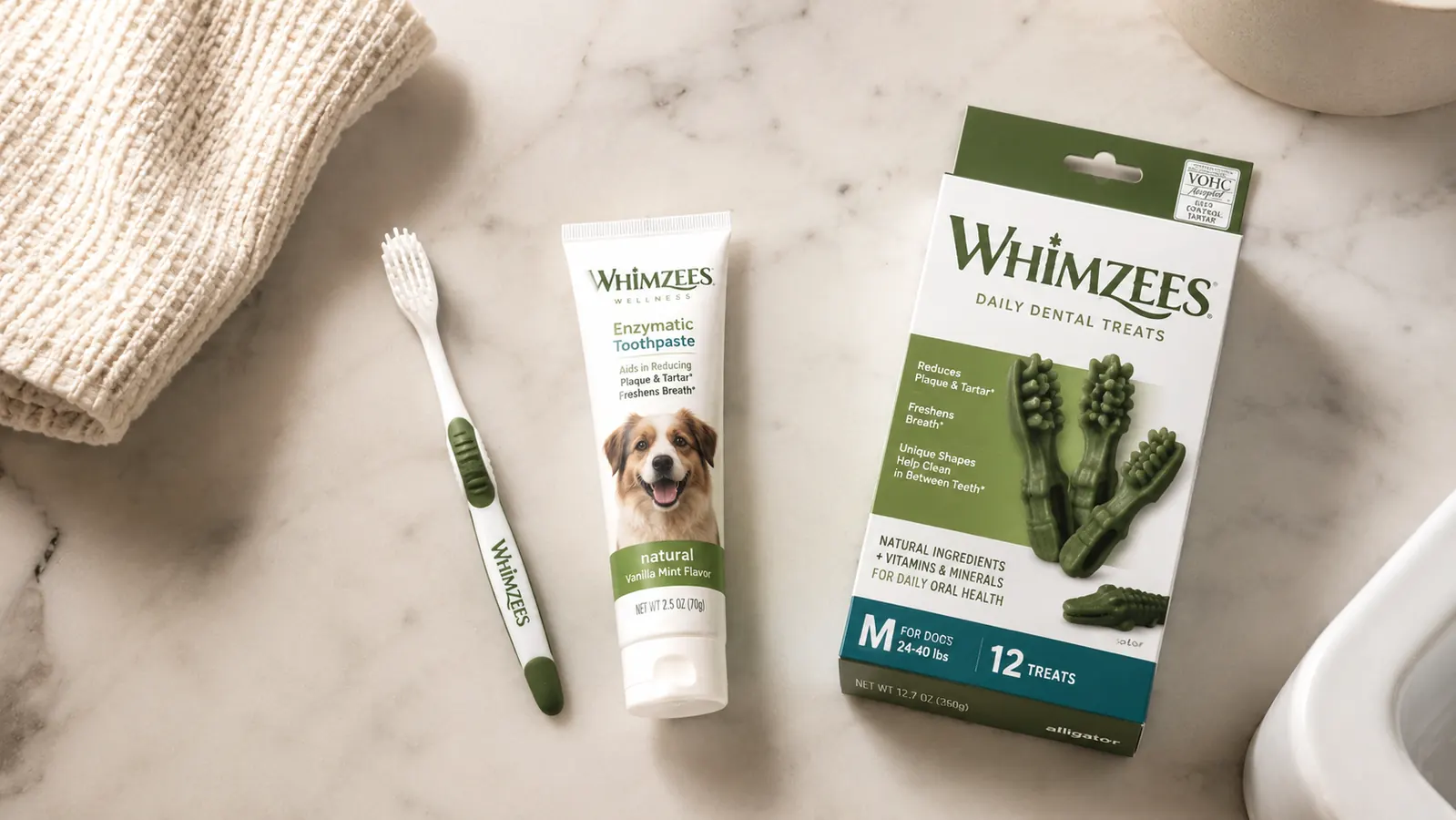
Dental chews do a solid job on the chewing surfaces and the sides of back teeth, but they cannot reach everywhere. The gum line on the front teeth and the inside surfaces facing the tongue are areas where plaque still accumulates even with daily chews. If you want to really cover all the bases, adding a brief brushing session two or three times a week on top of the daily chew is the most complete approach you can take outside of a professional vet cleaning.
You do not need a toothbrush designed specifically for dogs, though those work well. A finger brush, which slides over your index finger like a rubber thimble with soft bristles, is easier to maneuver in a dog's mouth and many dogs tolerate it better than a traditional brush. Use toothpaste formulated for dogs, never human toothpaste, because xylitol and fluoride are toxic to dogs. Enzymatic dog toothpaste is the most effective type since the enzymes help break down bacteria between brushing sessions.
If brushing is a non-starter because your dog makes it impossible, skip it and stay consistent with the daily chew. A chew every day beats brushing twice a week that never actually happens. The vet's gold standard is daily brushing plus dental chews, but the real-world version is whatever you can actually sustain. I manage to brush Biscuit's front teeth once a week and I consider that a win on top of the daily chew routine.
A dental chew every day beats a perfect brushing routine that never happens. Pick the habit you can actually keep.
Step 5: Track Progress and Know When to See the Vet
At-home dental care prevents new plaque from becoming tartar, but it cannot reverse tartar that has already hardened onto the tooth. If your dog already has visible yellow or brown buildup along the gum line when you lift their lip, the daily chew routine will stop that from getting worse but it will not make the existing tartar disappear. That requires a professional scaling under anesthesia, which your vet performs. Once that is done, starting the daily chew routine immediately after is the best way to extend the interval between professional cleanings.
Check your dog's teeth yourself once a week. Lift the lip on both sides and look at the back molars, which are where tartar builds fastest. What you are looking for is the gum line staying pink and flush with the tooth rather than red, swollen, or receding. A faint yellow tint on an older dog who has never had a cleaning is common. Dark brown buildup or a strong smell even after the chew routine has been running for several weeks means it is time to call the vet and schedule a cleaning. Do not wait, because untreated periodontal disease spreads to the jawbone and, in severe cases, contributes to heart and kidney disease.
On the positive side, you should notice some real changes within four to six weeks of consistent daily chews. Biscuit's breath, which used to make me turn my head when he panted in my face, improved noticeably by week three. By week six the vet confirmed at his follow-up that the light plaque accumulation on his back molars had not progressed. She said whatever I was doing, keep doing it. That was enough for me.
What Else Helps
A few other things contribute to a good dog dental routine without adding much effort. Water additives for dogs are a real product and some of them contain enzymes that help slow bacterial growth between chews. I have used them occasionally but they are not a replacement for the mechanical scrubbing action of a chew. Dental wipes are another option, which are pre-moistened pads you rub along the gum line, useful for dogs who tolerate handling of their mouth but are not brush-friendly. And regular annual vet exams with an oral exam included are worth every penny, because your vet can catch things you cannot see just by lifting a lip.
Diet matters a little too. Dry kibble tends to be slightly better for teeth than wet food simply because the crunching action provides some friction, though it is not a substitute for actual dental care. Raw feeders sometimes argue that raw meaty bones clean teeth, and there is some truth to that, but bones also carry fracture and splinter risks that dental chews do not. For most pet parents in a normal household, a daily dental chew is the lowest-friction, highest-consistency option available, and consistency is what wins.
If you want to compare specific dental chew options before committing, I have a full breakdown in my Minties vs Dentastix comparison that covers ingredients, cost per chew, and which dogs each brand suits best. And if you want the longer version of my experience with Minties specifically, the six-month review covers everything including what changed between month one and month six.
The daily chew that turned my vet visit around. Biscuit has been on these for six months.
Minties Dental Chews are vet-recommended, VOHC-accepted, and mint-flavored so dogs actually want them. The 20-count bag is easy to work through without committing to a giant bulk purchase before you know your dog likes them. Check current pricing and size options on Amazon.
Amazon Check Today's Price on Amazon →