
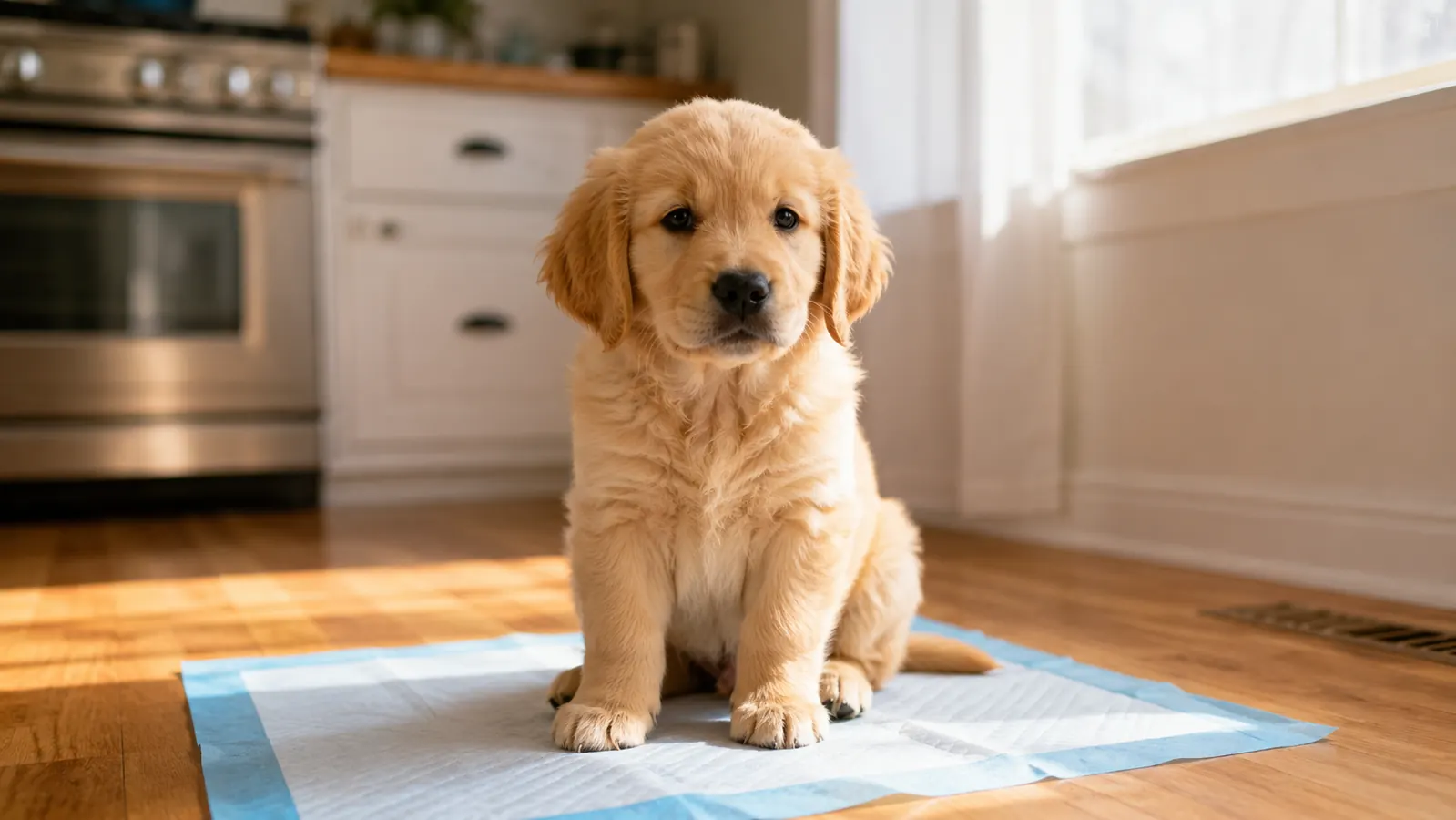
I brought home a 9-week-old beagle mix named Biscuit on a Wednesday. By Thursday morning I had already stepped in something wet in the dark and scrubbed my entryway rug twice. Potty training a puppy is not complicated, but it is relentless. The window between "need to go" and "already went" is about 30 seconds at that age, and they will not tell you it's coming. What actually works is not some elaborate training method. It's a consistent location, a predictable schedule, and a pad that does its job without leaking through to your floor. Training pads are not a permanent solution and they are not meant to be. They are a bridge: a way to give a very young puppy a clear, consistent spot to go while their bladder control is still developing. Use them right, and you can transition your dog outdoors in a matter of weeks. Skip the structure, and you'll be cleaning accidents six months from now wondering what went wrong.
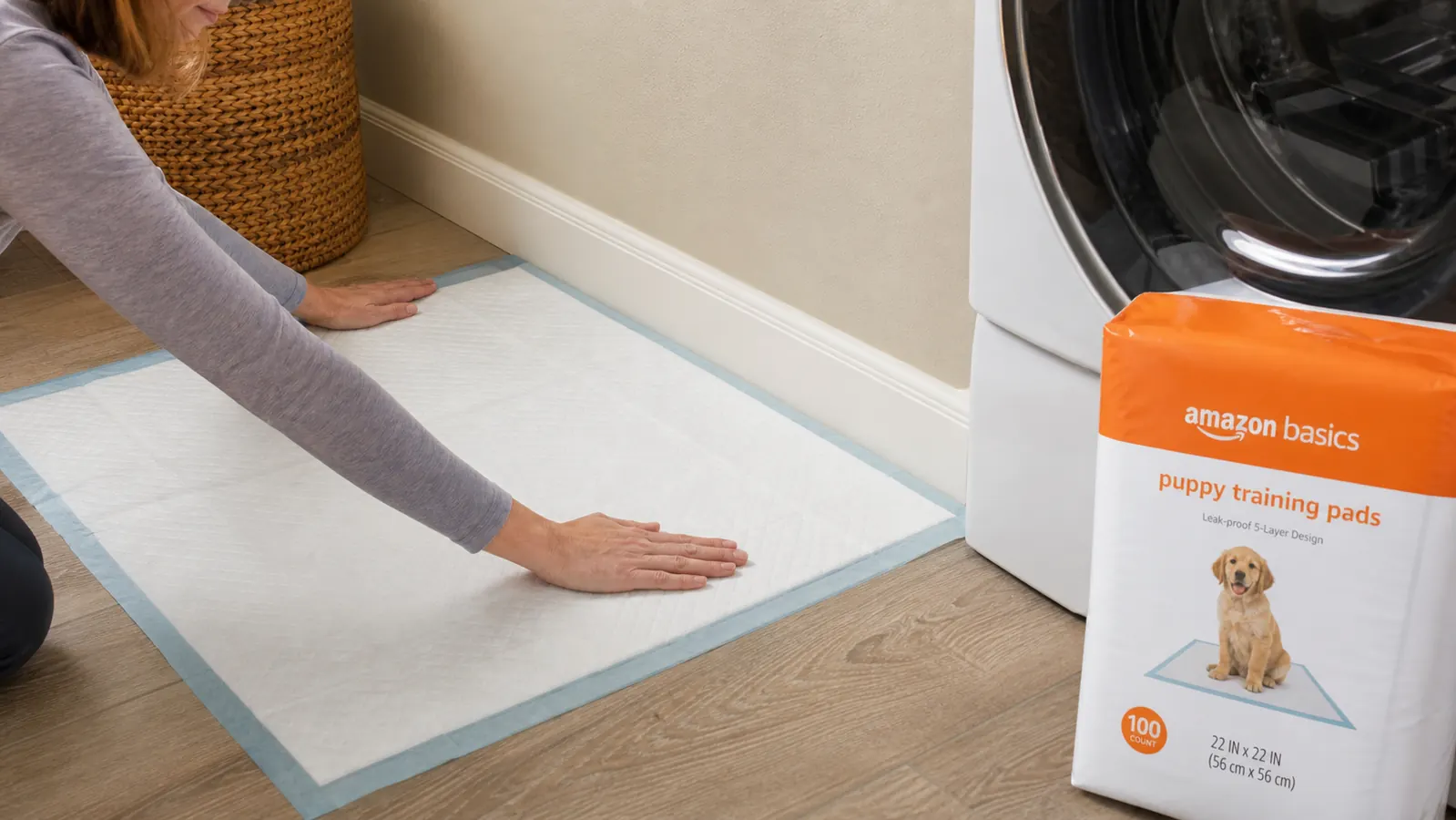
I've used the Amazon Basics Super Absorbent Puppy Pads through two puppies now. They're the pads I recommend to anyone who asks, not because they're fancy but because they work and they hold up. Five layers, quick-dry surface, leak-proof liner. The 22x22-inch regular size works for most breeds under 30 pounds; step up to the large 28x34-inch version for bigger dogs. With over 43,000 reviews and a 4.6-star average, these are not a surprise pick. They just consistently do what a pad is supposed to do.
Stop cleaning the same spot twice. One consistent pad beats three scattered ones.
Amazon Basics Super Absorbent Puppy Pads have a quick-dry surface that pulls moisture away fast so your puppy isn't stepping back through what they just left. Rated 4.6 stars from over 43,000 dog owners.
Amazon Check Today's Price on Amazon →Step 1: Pick One Spot and Commit to It
The single biggest mistake new puppy owners make is placing pads in multiple rooms to cover more ground. This teaches the puppy that the whole house is a toilet. Pick one location and use it every time, every day, until your dog is consistently hitting the pad without being carried to it.
The best spot is a low-traffic area with easy-to-clean flooring. Laundry rooms, mudrooms, and tiled bathroom corners all work well. Avoid placing the pad near their food and water bowl. Dogs naturally avoid eliminating where they eat, and putting the pad too close creates confusion. If you're in an apartment with no laundry room, a bathroom corner or a section of the kitchen near an exterior wall works fine. The key is consistency, not the perfect location.
Once you've chosen the spot, put the pad down and leave it there. Don't move it around to "where accidents keep happening." The goal is to teach your puppy where to go, not to follow them around catching mistakes. Fold the edges under if your puppy tries to drag or chew the pad. Amazon Basics pads have plastic-backed edges that hold up reasonably well to this, but some puppies will shred anything. If yours is a shredder, a plastic pad holder tray (sold separately, inexpensive) will stop the pad from sliding and make it much harder to grab and chew.
Step 2: Build a Schedule and Hold to It
Puppies under 12 weeks need to eliminate roughly every 30 to 45 minutes when they're awake and active. That sounds brutal, but the good news is that puppies also sleep a lot. A realistic schedule for an 8 to 10-week-old puppy: immediately after waking up (including naps), within 10 minutes of eating or drinking, after any play session that lasted more than 10 minutes, and right before bed. That's your five-to-seven natural windows per day where accidents are basically guaranteed to happen if you're not ahead of them.
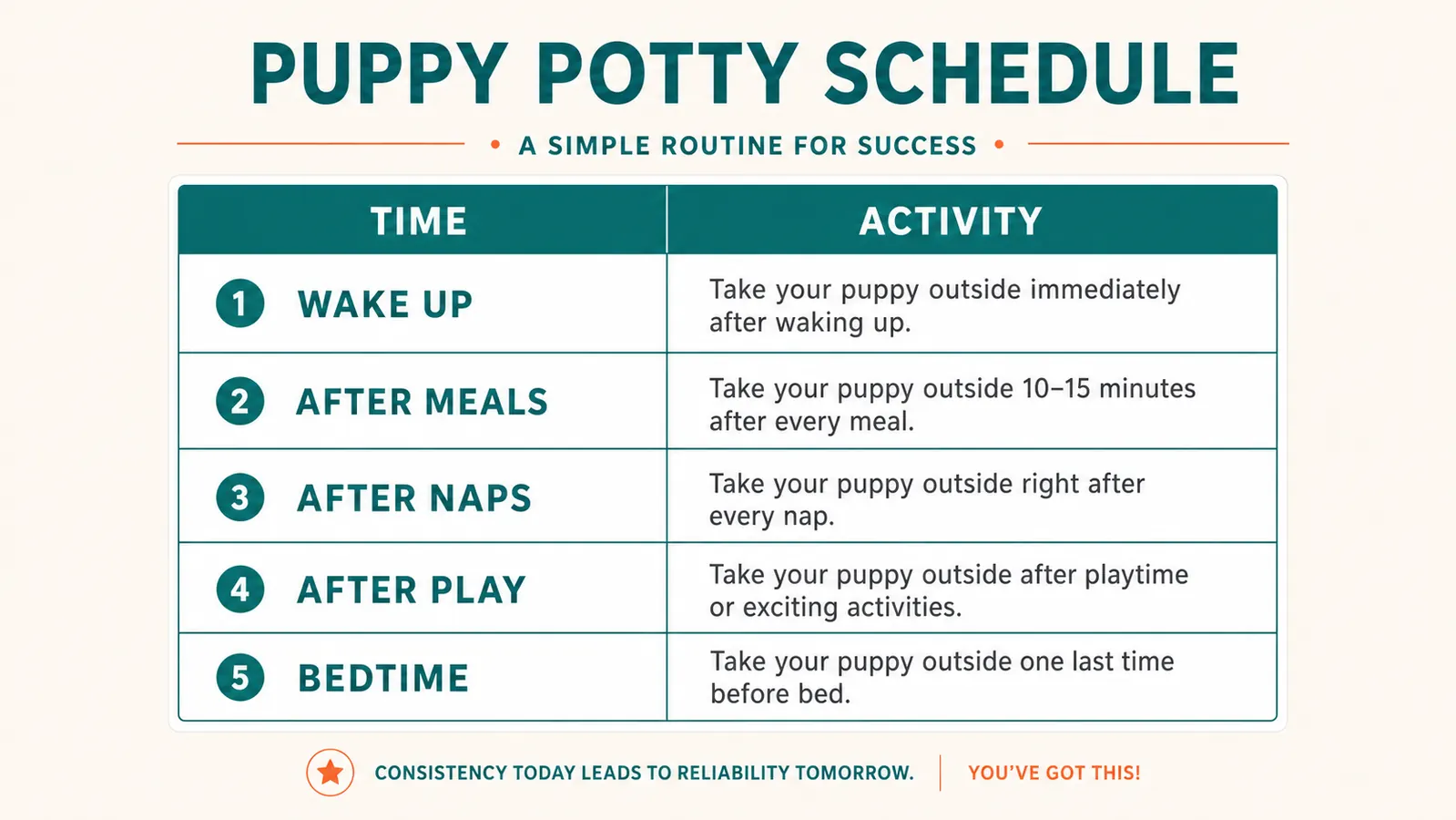
Carry or walk your puppy to the pad at every one of these windows. Don't wait for them to wander over on their own at first. You're building a habit and a location memory. As they get older (around 12 to 14 weeks), they'll start to move toward the pad independently when they need to go, especially if the schedule has been tight. For the first two weeks, set a phone timer if you have to. It feels excessive, but it cuts the training time in half.
The two times I see owners skip and then regret: right after a nap and right after a drink of water. Both trigger almost immediate elimination in young puppies. Build those two moments into the schedule as automatic pad trips and your accident rate will drop fast.
Step 3: Reward on the Pad, Not After
Timing matters more than the treat itself. The reward needs to happen within two seconds of your puppy finishing, while they're still on the pad. If you wait until they've trotted back to you, you're rewarding the trotting. Dogs do not connect a reward to something they did 10 seconds ago, no matter how much we wish they did.
Keep a handful of small, soft treats in your pocket during the first two weeks. Something pea-sized and smelly works best. The moment your puppy finishes on the pad, say your marker word ("yes" or "good") in a calm, clear tone and deliver the treat immediately. Don't throw a party and make them excited enough to run around the pad, or they'll smear it. Calm, immediate, consistent. That's the pattern that sticks.
Verbal praise works too, but treats accelerate the process noticeably in the early weeks. Once the habit is solid and your puppy is hitting the pad reliably without being guided, you can start fading the treats down to intermittent reward and eventually drop them. But early on, every single success on the pad should be marked and rewarded.
Reward on the pad, within two seconds of finishing. Waiting until they walk back to you rewards the walk, not the behavior you want.
Step 4: Handle Accidents Without Drama
Accidents will happen. If you catch your puppy in the act, a calm interruptive sound (a sharp "nope" or a clap) and then carrying them to the pad is the right move. Mark it if they finish on the pad. That's it. No scolding, no rubbing their nose in it, no extended lecture. Those responses do not teach the puppy where to go. They teach the puppy to be afraid of you in connection with elimination, which leads to puppies sneaking off to go behind the couch because they've learned that eliminating in front of you results in something scary.
Clean up accidents thoroughly with an enzyme-based cleaner, not just soap and water. Dogs can detect residual odor at concentrations far below what we can smell, and they'll return to spots that still smell like a bathroom to them. Enzyme cleaners break down the proteins in urine and feces rather than just masking the scent. Spray it on, let it soak, blot dry. If you've got a spot your puppy keeps returning to despite cleaning, the pad holder gets moved there temporarily while you retrain.
Don't increase pad coverage area after accidents. It's tempting to put a second pad down near the accident spot, but that signals to your puppy that more of the floor is acceptable territory. Stick with one pad in one spot and tighten up your schedule monitoring instead.
Step 5: Transition Off the Pads to Outdoor Potty Breaks
Once your puppy is consistently hitting the pad on their own with minimal accidents (most puppies get there between 10 and 16 weeks with consistent structure), you can start the outdoor transition. The goal is to shift the bathroom location from the pad to a designated outdoor spot, not to eliminate pads overnight.
Start by moving the pad a few inches toward the door every two to three days. Your puppy will follow it. When the pad is right at the door, start taking them outside at the same schedule windows where they'd normally hit the pad. If they go outside, reward with the same enthusiasm you used for the pad. If they don't go outside after five minutes, bring them in and put them on the pad. No punishment for not going outside during the transition. You're just slowly shifting where success can happen.
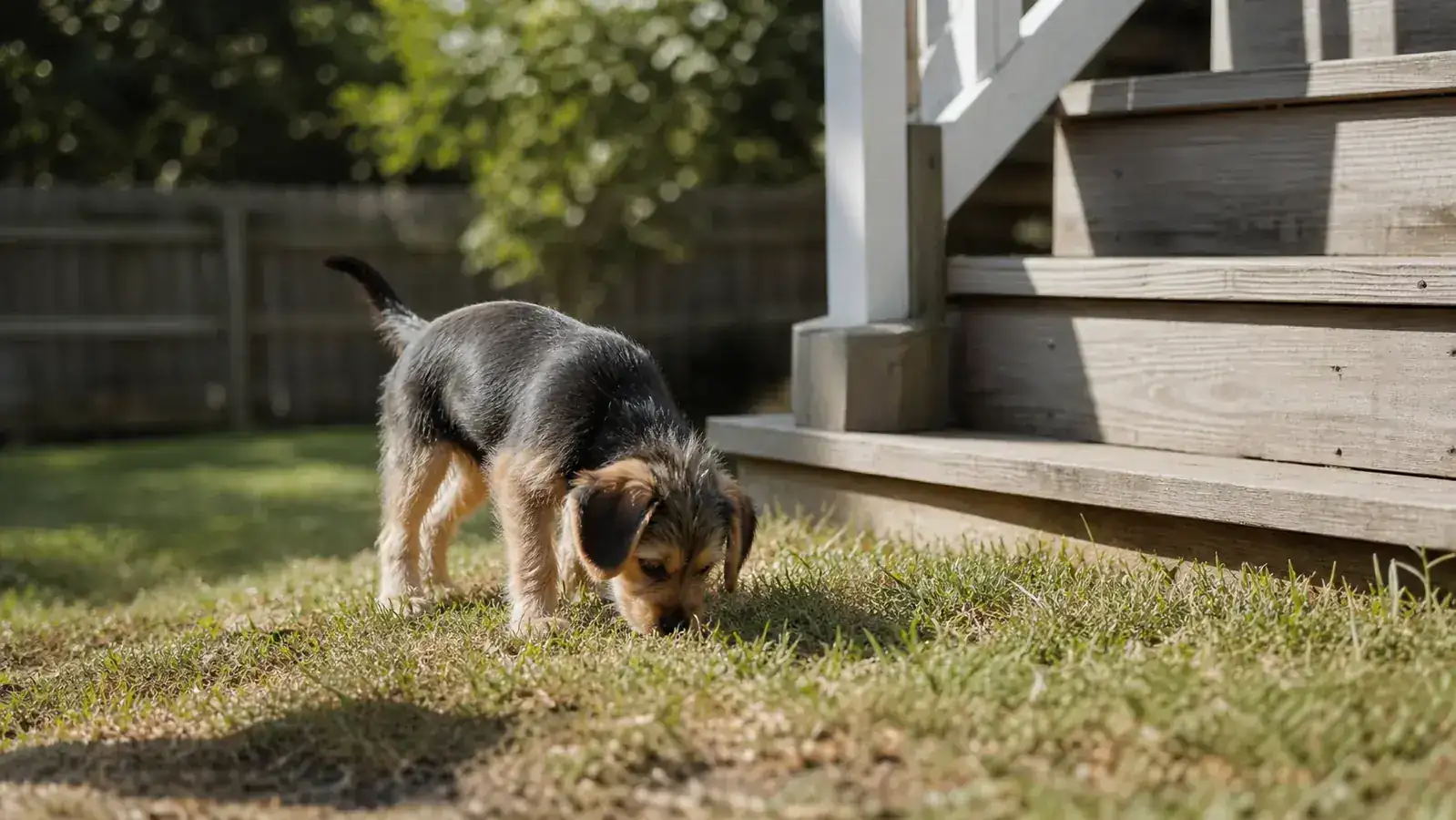
Once they're reliably going outside, pull the pad entirely. Some puppies make this transition in two weeks. Some take a month. It depends on how consistent you've been and how early you started outdoor trips. If your puppy has been solely pad-trained indoors for three or four months with no outdoor exposure, the transition will take longer. Start outdoor trips as early as vaccines allow it. The pad is the bridge, not the destination.
What Else Helps
A crate is the most underused potty training tool there is. Puppies instinctively avoid soiling where they sleep, so a correctly sized crate (just big enough to stand, turn around, and lie down) is a natural biological brake on accidents when you can't watch your puppy directly. If you're leaving a room for 10 minutes, the puppy goes in the crate. Take them to the pad the moment you come back. Combine crate use with the schedule above and you can cut accident frequency dramatically.
Enzymatic cleaner is non-negotiable. A bottle of something like Nature's Miracle or Rocco and Roxie should be sitting on the shelf before the puppy comes home. Clean every accident immediately and thoroughly. Residual scent is what turns a one-time accident spot into a recurring bathroom.
A pad holder tray costs about eight dollars and is worth every cent if your puppy is a pad mover or chewer. It keeps the pad flat, stops it from sliding on smooth floors, and makes the pad feel more like a fixture in the room than a loose paper thing to investigate. Biscuit destroyed two pads before I got a tray. Haven't had a shredded pad since.
Finally: don't vary the pad brand in the early weeks. Dogs use scent to identify their bathroom spot, and some training pads use pheromone attractants to draw puppies back. Switching pads mid-training can confuse the scent cue. If the Amazon Basics pads are working, stick with them through the training phase. They consistently absorb without leaking and don't fall apart when a puppy scrabbles around on the surface, which is more than can be said for the cheaper options I've tried.
One pad in one spot, changed before it's soaked. That's the whole system.
Amazon Basics Super Absorbent Puppy Pads are the easy default here: 5-layer construction, leak-proof liner, quick-dry surface, and a price per pad that won't make you wince when you're going through several a day. Rated 4.6 stars from 43,000-plus buyers.
Amazon Check Today's Price on Amazon →